
Claiborne Parole and Probation
Parole and probation both allow a person to live outside a secure facility, but they begin in different ways. The Louisiana Board of Pardons, Committee on Parole, makes discretionary parole decisions after a person becomes eligible and receives a hearing. Probation usually comes from a court sentence. It can follow a suspended sentence or the confinement part of a split sentence without any parole hearing. Louisiana law also allows some good-time releases to serve the rest of the full term on unsupervised parole. That status is still not the same as a completed sentence.
DPS&C says its LAVNS data includes prison, probation, and parole records. A community-supervision entry is good evidence that physical imprisonment ended for that correctional case. It does not show that every other parish, state, or federal matter has ended. The source that owns each fact must be checked.
| Record type | How it begins | Best confirmation |
|---|---|---|
| Parole | Committee decision after eligibility and hearing | Committee record, facility movement, and supervision status |
| Probation | Court order, often after a suspended or split sentence | Second JDC order and assigned district office |
| Unsupervised parole | Statutory good-time release for the balance of a full term | DPS&C computation and status record |
| Discharge | Legal supervision term ends | DPS&C or court discharge record |
- Parole
- Conditional release from prison while the sentence continues.
- Probation
- Court-ordered community supervision instead of, or after, some confinement.
- Absconder
- A status alleging that a person stopped complying with required supervision contact.
- Discharge
- The formal end of the correctional supervision term.
Verify Claiborne Post-Release Supervision
Begin with identity and custody type. A name match is weak when dates of birth, DPS&C numbers, or case numbers differ. The official Louisiana search is routed through LAVNS/VINELink, and DPS&C says that prison, probation, and parole information updates every 24 hours. Read the reporting agency and status, not merely the fact that a name appears. A local jail entry means physical custody. A probation or parole entry means community corrections has reported that status.
- Search Louisiana VINELink by full legal name, then repeat with the DPS&C number or case ID if available.
- Compare date of birth, age, facility, reporting agency, and public identifiers before accepting a match.
- Read whether the record describes prison custody, probation, parole, or another status. Save the retrieval date because a current result can change.
- Call the district office and ask whether it is assigned to the identified case. Provide the name and DPS&C number or date of birth when requested.
- For parole, match the supervision result to the Committee docket and decision. For probation, compare it with the Second JDC sentencing order.
- If the office is not assigned, ask for the correct district rather than treating the failed referral as proof that supervision ended.
The full Claiborne Parish release-record path is also explained on the released-inmate search page. It is the proper fallback when a community status does not reveal the actual departure date or destination.
Claiborne Probation Office Assignment
The apparent nearby supervision contact is the DPS&C Minden District. The official directory and current agency brochure list that office, but the reviewed directory does not publish a parish-boundary map that expressly assigns every Claiborne Parish case. Geography alone is not enough. Call and ask whether Minden owns the named record. If not, request the assigned district.
The official probation and parole office directory is the source for office listings.
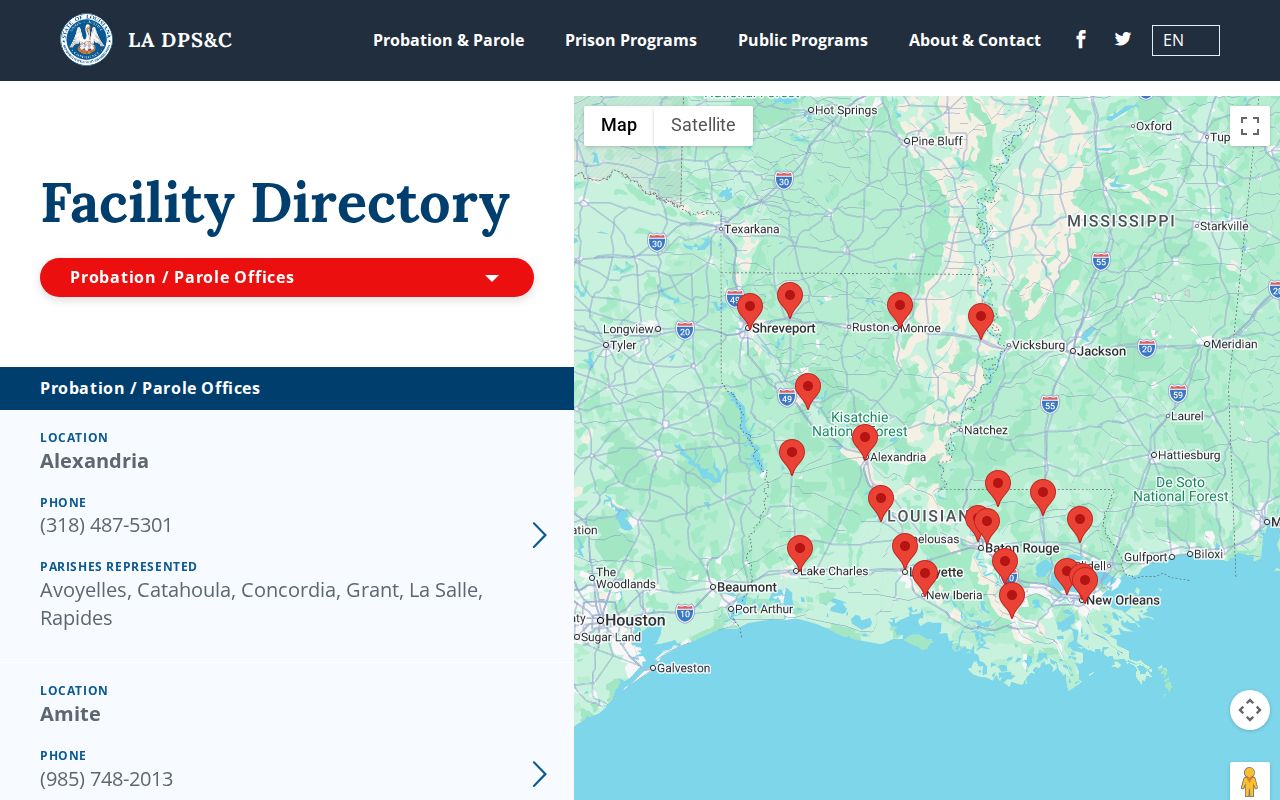
The directory image helps identify the Minden contact, but a phone confirmation still decides which office holds the individual case.
DPS&C Minden District403 Industrial Drive
Minden, LA 71055
318-371-3020
Confirm the case assignment by phone.
Keep the question narrow. Ask whether the office is assigned, whether the public status is active parole, probation, or another category, and which office should be called if the case belongs elsewhere. A district office should not be asked to certify a jail exit that it did not execute.
Claiborne Parole Decision Sequence
A parole case moves through distinct stages: eligibility, scheduling, hearing, decision, fulfillment of prerelease terms, physical departure, and community supervision. Each stage answers a different question. Louisiana Revised Statutes 15:574.4 and 15:574.22 govern eligibility categories. The official notice and docket establish scheduling. A completed Committee record establishes the decision. The prison movement record shows when the person left. LAVNS and the district office show the later community status.
The current parole docket page groups notices and agendas by year and hearing week. The research observed several multi-day hearing weeks in many months, not one universal monthly parole event. Hearings are public and conducted through Zoom with YouTube streaming, with in-person attendance instructions at DPS&C headquarters. Those instructions can change and should be checked before attendance.
A scheduled hearing does not mean release. Eligibility permits consideration, while a grant is only the Committee action. Conditions and facility processing may remain. A later denial, rehearing, violation, or revocation can also change the record. Always retain the stage label.
Claiborne Supervision Warrants and Revocation
CPSO publishes selected bench-warrant items in its news archive. DPS&C separately publishes parole-revocation schedules and prior decisions. These are different systems. A bench warrant comes from a court matter. A parole warrant or revocation process concerns alleged noncompliance with supervision. Either may exist while the person remains outside a jail, and neither list by itself proves present custody.
The CPSO bench-warrant article shows the local news pattern.
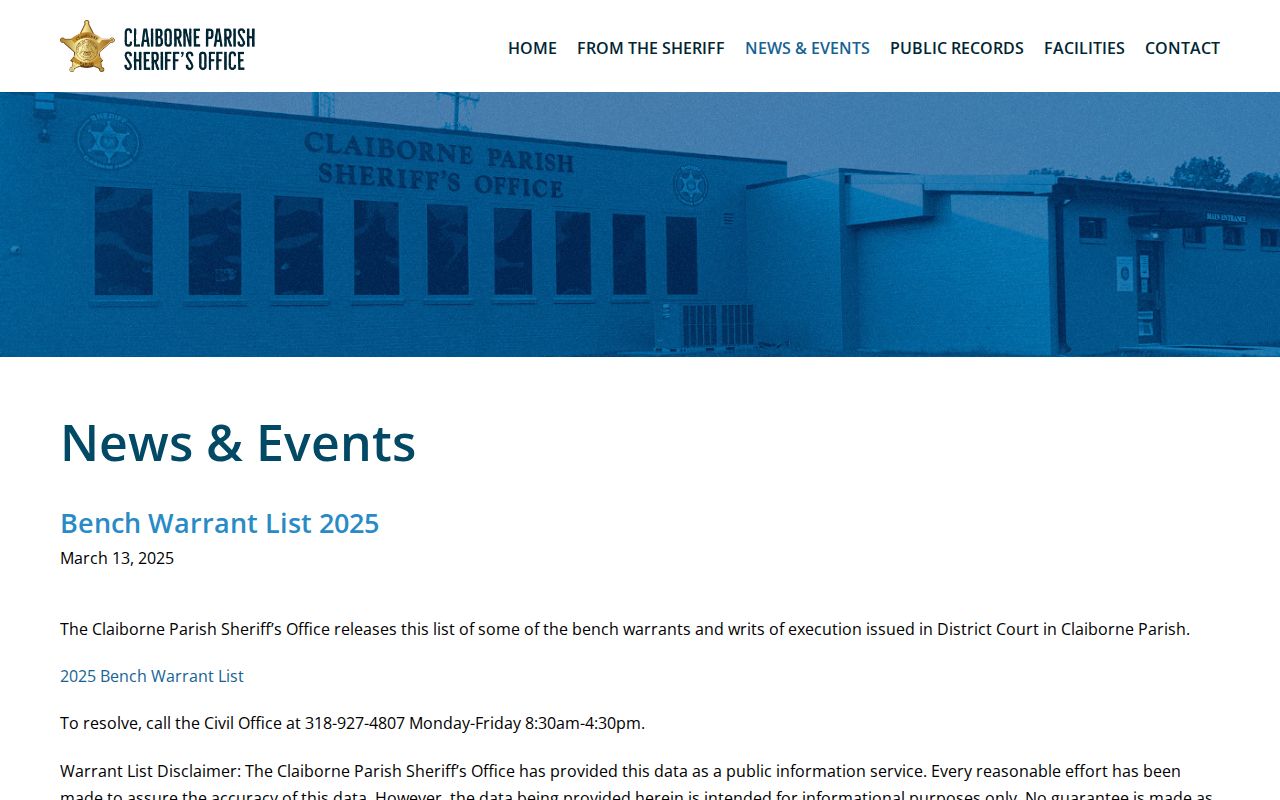
The named list can identify a court lead, but the issuing authority, case number, and later disposition must be verified.
For the state process, the parole revocation page provides schedules, decisions, and a docket-question line at 225-342-6622. It states that hearings begin at 8:30 a.m. and docket pages update at noon on weekdays, subject to change. That cadence applies to the revocation pages only. It does not describe the sheriff roster or all LAVNS data.
An absconder flag alleges failure to comply with contact or other supervision duties. It is not a new conviction. Match the issuer, identifier, and date before connecting a warrant to a supervision record.
Claiborne Parole Reentry at DWCC
David Wade Correctional Center adds a local reentry layer that begins well before release. Its official program description says planning starts at entry with assessment and a Reentry Accountability Plan. The facility also provides 100 hours of prerelease instruction. Subjects include communication, wellness, family dynamics, budgeting, and parole conditions. That work prepares for the move from secure custody, but it does not establish the legal release date or current supervision status.
The official DWCC page documents this reentry structure.
The program record supplies local context. The Committee decision, DWCC movement record, and assigned supervision record still prove the separate legal steps.
Claiborne Probation Conditions and Violations
Conditions depend on the controlling order and case. A court sets probation terms. The Committee and DPS&C govern parole terms. Common topics can involve reporting, lawful conduct, travel approval, treatment, or payment duties, but no generic list should be treated as the terms for a named person. Obtain the public order or agency record instead.
Alleged noncompliance can lead to a warrant, hearing, modification, or return to custody. It does not erase the earlier release, and it does not prove a new conviction. Compare the alleged event with the court or revocation record. A LAVNS custody change may report a return to physical custody without explaining the final legal outcome.
Registrant status is also separate. The Louisiana State Police registry applies only to people with a legal duty to register and cannot be used as a general parole or probation locator. Its displayed community information does not prove where a person was released or which office supervises the case.
Claiborne Supervision Discharge Records
Discharge is the formal end of a correctional supervision term. It differs from leaving jail, receiving parole, or finishing a hearing. A person may have one physical release date, a later end of active supervision, and a still later full-term expiration. Good-time release to unsupervised parole makes those distinctions especially important.
Ask DPS&C or the court for the record that states the supervision category and discharge date. If an old LAVNS result is gone, that absence cannot prove discharge. Public display is not the same as agency retention. Louisiana R.S. 44:36 provides a special retention minimum for DPS&C adult-offender records tied to full-term expiration or death, but it does not promise an online historic entry.
A complete conclusion should identify the correctional case, the office that owned it, and the date and type of discharge. Other warrants or sovereign cases require their own checks. One closed supervision record never speaks for every possible matter.
When records conflict, compare the dates and the agency role. The court owns its sentence and probation order. The Committee owns its parole action. A facility owns the physical movement it carried out, while the Division of Probation and Parole owns the community case. Asking each office for the fact it created avoids treating a stale status as a final discharge. Preserve the DPS&C number and court case number with every response.